
Welcome to our Snowboarding Online Course, your all-out tutorial for basic skills, techniques, and maneuvers in Snowboarding.
Know how to snowboard and learn the proper moves right from the very beginning so you will have a good foundation before venturing into the intermediate and advanced skills.
Table could not be displayed.Pictures are also provided as we want you to see a particular move before you actually try it out. We hope that you will learn a Snowboarding Tip or two in these sections.
Interested in adding a creative flair to your snowboarding adventures? Alongside perfecting your skills on the slopes, why not explore the world of animation to share your snowboarding journey in a unique way?
Go here to explore how to make your own animation and bring an extra dimension to your snowboarding experiences!
Starting Out

Snowboard Basics
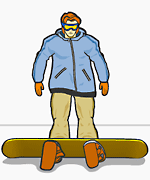
STEP 1: Find a flat area or gentle incline. Keep away from high-traffic areas. Rest your Snowboard on the snow, with the bindings facing down. This is to secure your board in place and keep it from getting away from you.
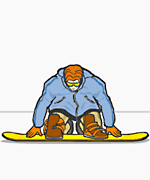 STEP 2: Turn the board towards you. If you are on a gentle incline, attach the safety leash on your front leg to keep the board from sliding down.
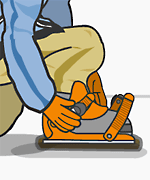 STEP 3: Start fastening with your front foot. Place your foot in the front binding. Fasten the ankle strap. Make sure that your heel is securely in place.
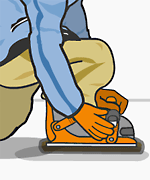 STEP 4: After fastening the ankle strap, secure the toe strap. Make sure that it is snug enough without hurting your foot. Now that your front foot is buckled in, you can start getting accustomed to your board.
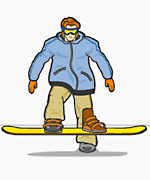 STEP 5: Stand up and move your board up and down using your front foot. Do this repeatedly until you get comfortable with your board.
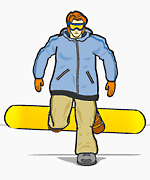 STEP 6: At this point, put your free foot forward. This is the same as Step 5 but this time, the board is behind you. Move it up and down to acclimatize yourself to the board.
Gearing up on the slope and getting accustomed to your board are some of the fundamentals in learning how to ride.
Getting comfortable with your board and your set of equipment, in general, can help you in performing various Snowboarding skills, techniques and maneuvers.
Strapping in, standing up and acclimatizing yourself to the board are some of the first few things you need to know as a beginner. In this section, get some valuable Snowboarding Tips on how to gear up on the slope.
Carrying your Snowboard
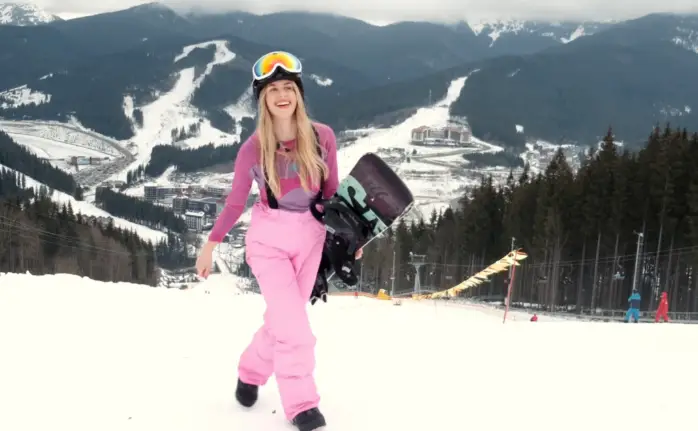
When you are walking on the slope, watch out for other people or objects that you might hit with your Snowboard. In this section, learn several ways to carry your board.
There are several ways to carry your Snowboard while on the slopes. One important thing to remember is to watch out for other people or objects you might hit with your board when you are walking.
Another one is to avoid dropping your board on the slope, unless you want to go on a Snowboard chase. In this section, learn several ways to carry your Snowboard:
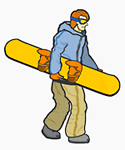 The most common way of holding your Snowboard is to carry it like a book. Simply carry your Snowboard under one arm with your hand holding the board in the middle for balance. In this way, your board is pointing at the same direction you are facing.
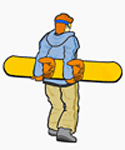 Another way to carry your Snowboard is to put it behind your back and hold it with both hands. This is less tiring than the first since you will be using both hands. However, this will be quite a challenge when going uphill as the weight will somehow drag you down.
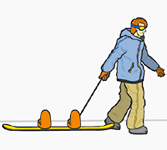 You can also just drag your Snowboard up the slope by holding or wrapping the leash around your wrist. This is especially convenient when you are traveling long distances and you need to carry your Snowboard. Just make sure that you don’t bother anyone when you are dragging your board on the slope.
If you have to leave your board alone, one option to keep it safe is to use a lock. Some resorts provide snowboard locks for specific kinds but it would be more advisable if you have your own. You can also share locks with your friends. If you decide to leave your board at the base, make sure that it can be easily seen from where you are.
We have listed some of the ways to carry your Snowboard. In general, it is a matter of preference. No matter how you do it, just make sure that you will not hit anyone or it will not slide down the slope.
Skating
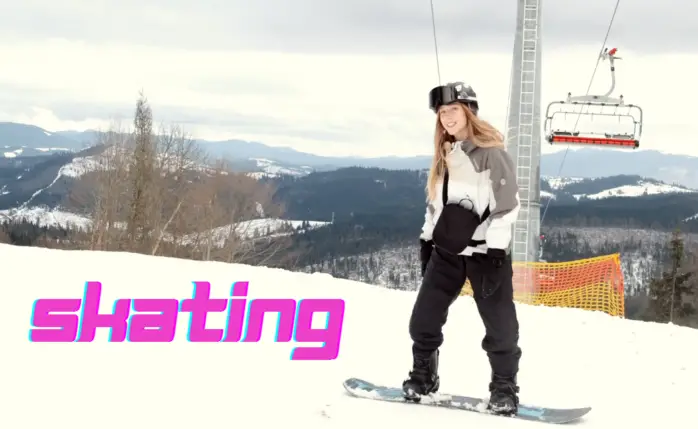
Learn Skating so you can move through flat areas or terrains and get on and off the chairlift with ease.
Mastery of skating from one place to another is a useful skill in Snowboarding. You will have to skate when you are making mid-mountain transfers from lift to lift, crossing the flats from the base lodge over to a lift, or when trying to get moving again if you get caught on a ‘cat track’.
Practicing this useful technique will also help you get the feel of gliding the board forward on the flat before you attempt the same motion on a gradual slope.
Here are some tips on how to skate
Attach your front foot to the Snowboard Bindings, and leave your back foot free.
Make a skating motion by placing your front foot in front of you while using your back foot to move forward. Skating/Sliding on your Snowboard with one foot attached is something you need to learn and would do often in Snowboarding. Every time you need to enter or exit a lift or travel short distances on a level or uphill slope, you will need to skate.
Try skating around but make sure that your back foot should never be ahead of your front foot. Make sure to only make small steps with your back foot.
As you improve, you will learn how to take bigger steps and really kick with your back foot.
Also, make sure to keep your front leg slightly bent with most of your weight on your front foot. It will help keep your balance.
As your skills improve, you will be able to make some speed. You will also be able to place your back foot on your Snowboard Stomp Pad or press it against the back of your Snowboard Binding if you don’t have a stomp pad.
hen, try to keep both feet on the board as much as possible. Try to crouch and get up while sliding on the board.
You might not be comfortable with skating at first. Try practicing it and soon enough you will be good at it. Skating demands more balance and attention to the terrain so keep on practicing and you will soon be able to skate with ease.
Switching Edges
This Snowboard Exercise will teach you how to switch edges with both feet strapped in. Just use our animation as your guide as you move from one edge to the other.
If you find yourself on the wrong edge, you need to unfasten your Snowboard Bindings, turn around, and attach the bindings to your feet.
However, there is an easier way of switching edges. This is by rolling on your side while your feet are attached to the board. In this section, learn how to switch edges the easy way:
Switching Edges – Toe to Heel
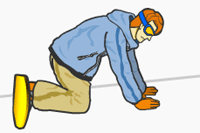 STEP 1: This is probably easier to do than switching from heel edge to toe edge. Drop on your knees and plant your hands on the snow.
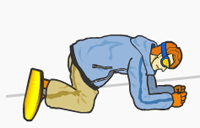 STEP 2: For additional support, move your elbows down so it will be easier to roll on your side.
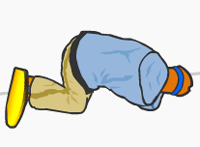 STEP 3: Duck your right shoulder and move your upper body towards the direction of the roll.
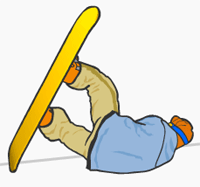 STEP 4: Get your Snowboard up in the air and gradually turn it around.
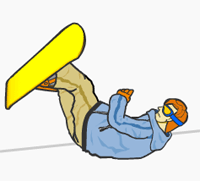 STEP 5: At this point, you should be lying on your back and your Snowboard is in midair.
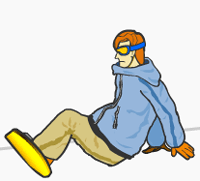 STEP 6: Put your Snowboard down. Using your hands, push yourself up to a sitting position. You have already switched from toe to heel edge.
Switching Edges – Heel to Toe
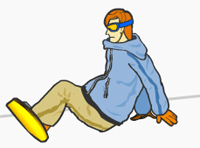 STEP 1: In changing edges from heel to toe, sit on the slope and slightly bend your knees.
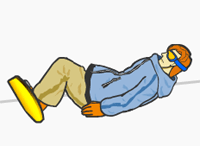 STEP 2: Lie down and put your hands on your sides.
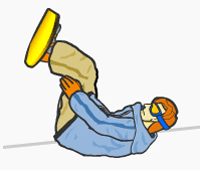 STEP 3: Put your hands behind your knees and try to get your Snowboard in the air.
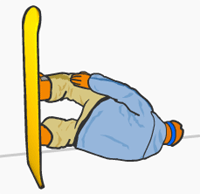 STEP 4: Turn the Snowboard once it gets airborne. Plant the tail or nose of the board into the snow.
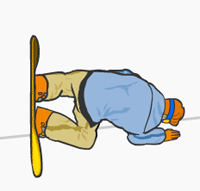 STEP 5: Continue to roll on your side until the Snowboard is already is on its toe side and you are facing the uphill.
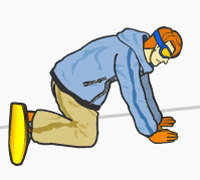 STEP 6: At this point, you have switched from heel edge to toe edge. Use your hands for support as you stand up.
This is the basic way of switching edges when you are on the slope. You will soon be able to change sides easily when you find yourself on the wrong edge. Just make sure to keep away from other snowboarders when you need to do this.
Gliding
This basic movement will help you to be comfortable in shifting your weight forward and in gaining Snowboard control. Read our easy-to-follow instructions on how to make straight glides.
Gliding is one skill that you should be able to do before you progress to other Snowboard Exercises. This basic movement will help you to be comfortable in shifting your weight forward and in gaining Snowboard control.
This will also be helpful when riding a chairlift. You can be able to unload from a chairlift in control if you are able to turn out of a glide. As soon as you are able to stand tall on a board and glide down from an incline, then you are ready for the chairlift.
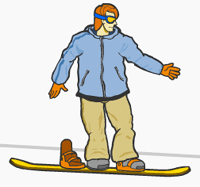 STEP 1: First, find a gentle slope with as little human traffic as possible. Maintain your balance while standing. You can spread your arms a little bit to help you stay in upright position. As soon as you are ready and the coast is clear, place your back foot just in front of the back Snowboard Binding.
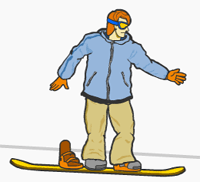 STEP 2: Lean forward so you can start moving downhill. Point your toes down to move forward and shift your weight backward to slow down or stop. Always look at where you want to go and not at your Snowboard.
Moving on the slope with only one foot attached to the Snowboard can be pretty exhausting but you will find that it will be very useful in many ways. Practice and be comfortable in doing straight glides before trying other Snowboard Exercises.
Moving Up the Slope
You will have to go up and down the slope repeatedly to learn Snowboarding. In this section, learn how to inch your way up the slope with both feet strapped in.
After trying to skate/slide down the bunny hill, you will now have to learn how to move up the slope. You can do it by inching your way up while both feet are attached to the board. In this section, learn how to move up the slope with both feet strapped in:
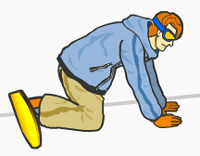 STEP 1: Start off by finding a slope with as little human traffic as possible. Face uphill and with both feet strapped in, assume a frog-like position – toe edge on the snow, knees bent, and your hands planted on the ground just like in the illustration.
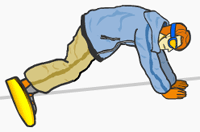 STEP 2: Begin inch worming by moving your arms forward. Then, gradually extend your legs. Make sure your Snowboard is still on its heel edge. This position is quite difficult to make because of the weight of your body and the inclination of the slope. Just use your arms and your heel edge for support.
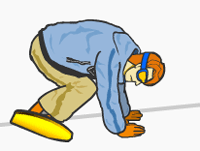 STEP 3: This step will require considerable effort on your part. Without moving your arms, pull your legs toward you just like what a frog’s hind legs do when it hops. It helps if you elevate your Snowboard and use your knees to move forward.
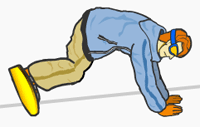 STEP 4: Repeat the steps until you have inched your way up the slope. If you can perform this move well, then you won’t have a hard time going up the slope with your Snowboard still attached to your feet.
Moving up the slope in this manner is quite tedious so you can only perform it for short distances only or if you can still endure doing the steps repeatedly.
Snowboard Exercises
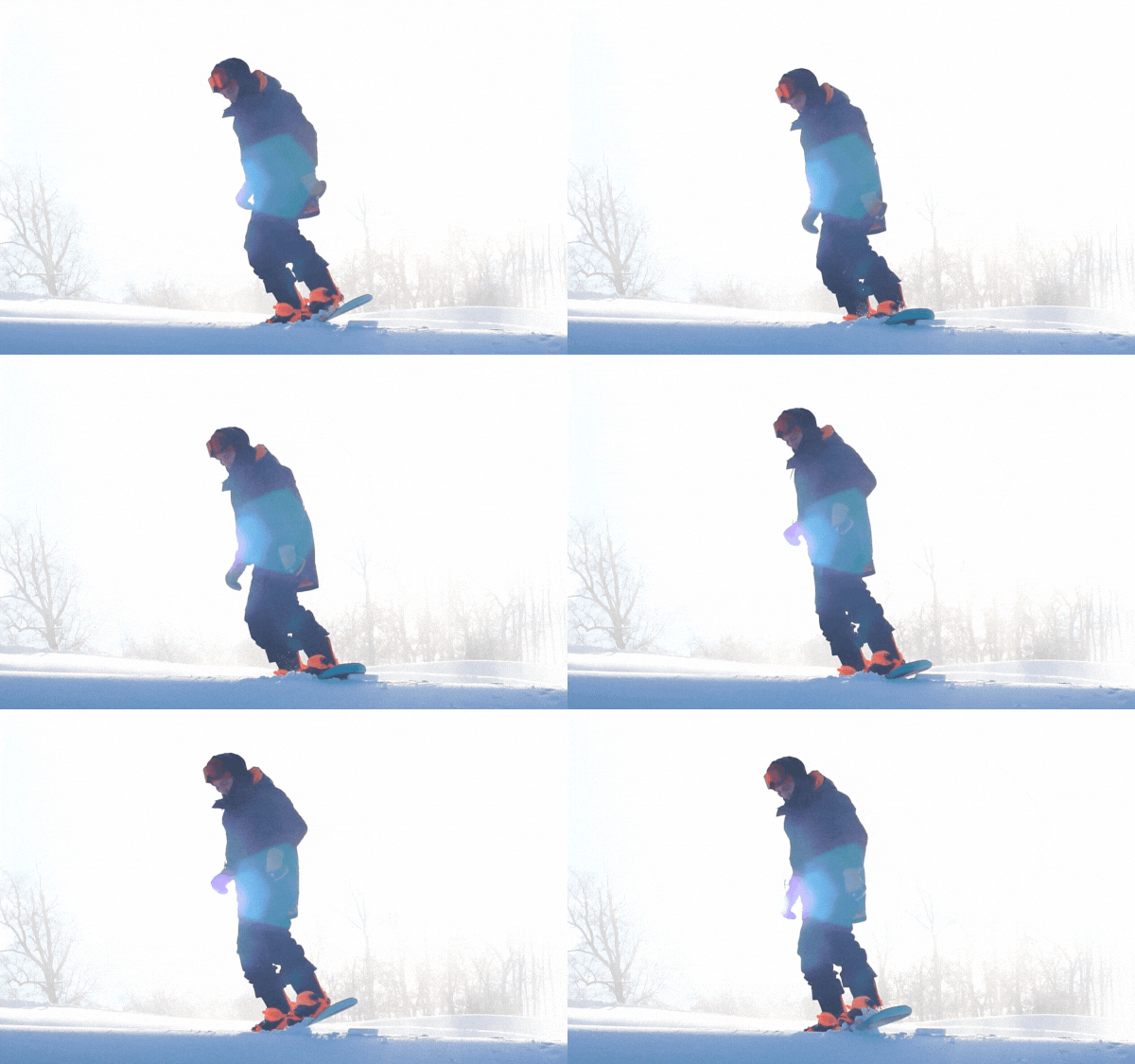
Sideslipping (Heelside)
Sideslipping is a controlled slide along the Fall line of a slope. This will teach you how to use the heel edge of your Snowboard in controlling your descent.
As mentioned in our Sideslipping (Toeside) section, Sideslipping is sliding along the fall line of the slope. This exercise will teach you how to use your Snowboard’s edges to control your speed in going downhill.
In this section, know what Sideslipping (heelside) is all about and learn how to use the heel edge of your Snowboard in controlling your descent:
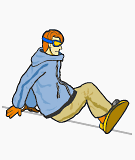 STEP 1: When starting out, learn on a moderate slope. Your feet should be attached to your Snowboard Bindings. Then, face downhill and sit on the ground. Your legs should be bent and your snowboard should be on its heel edge. Make sure to keep your balance.
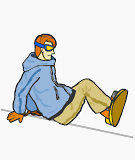 STEP 2: Dig your heel edge deeper into the snow. This will give you a firm hold or a stable position before you continue. Plant your hands into the snow to support your upper body.
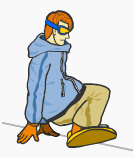 STEP 3: Move your hands toward your body. Use them to balance yourself while you lift yourself gradually from the ground. Distribute your weight evenly to your knees to help maintain your balance.
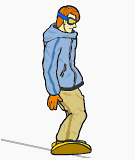 STEP 4: Finally, try to stand up. This is quite a difficult position to make but it can be mastered through practice. Just find your balance and hold your upright position while the board is on its heel edge.
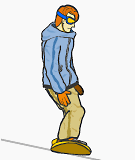 STEP 5: Know how to control your Snowboard and the speed of your descent using your heel edge. Your speed in going downhill increases as you decrease your edge angle. Push your Snowboard further down for more speed.
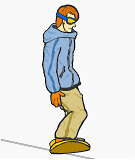 STEP 6: In the previous step, you learned that you will gain more speed if you decrease your edge angle. This time, increase the edge angle of your Snowboard. You will notice that there is a decrease in your speed. Keep on slowing down by continuously increasing the angle of your Snowboard heel edge. Soon, you will come to a halt.
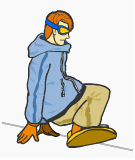 STEP 7: You have finally reached the last step of the exercise. Keep your board on its heel edge while gradually lowering your body. Put your hands on the ground to support your body.
At this point, you already know how to control your Snowboard (heelside and toeside). In general, it does not really matter if you learn Sideslipping on the heel edge or toe edge first since you will learn both as you go on with the Snowboard.
Sideslipping (Toeside)
After learning Sideslipping (heelside), you can try doing its counterpart. Know what Sideslipping (toeside) is all about and learn how to use your board’s toe edge in controlling your descent.
Sideslipping is simply sliding along the fall line of the slope. This skill will teach you how to control your Snowboard and make use of your edges when descending.
There are many advantages of learning this skill. First, it will teach you the importance of edge awareness. Sideslipping is one skill that you should learn before you can do traverses. Eventually, you will also be able to perform basic turns.
When you decrease the angle of your board’s uphill edge, it will initiate a sliding movement. On the other hand, if you increase the edge angle, the board will slow down and stop.
In this section, know what Sideslipping (toeside) is all about and learn how to use your toe edge in controlling your descent:
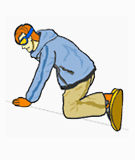 STEP 1: When starting out, learn on a moderate slope. Your feet should be attached to your Snowboard Bindings. Face uphill with your board directly across the fall line. Bend your knees until they touch the ground. Make sure to keep your balance.
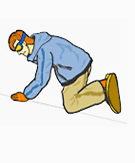 STEP 2: While on your knees, dig your toe edge deeper into the snow. This will give you a firm hold or a stable position before you continue. Plant your hands into the snow to support your upper body.
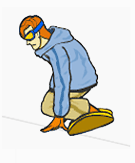 STEP 3: Then to get up on your toe edge, move your hands toward your body and put them on your sides. Use your hands to balance yourself while you lift your knees gradually from the ground. Next, steadily extend your legs and try to stand. Keep your balance and make sure that your board remains on its toe edge.
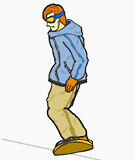 STEP 4: Finally, try to stand up. This is quite a difficult position to make but it can be mastered through practice. Just find your balance and hold your upright position while the board is on its toe edge.
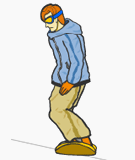 STEP 5: At this point, learn how to control your Snowboard and the speed of your descent using your toe edge. Decrease your edge angle. You will notice that your speed in going downhill increases. You will descend faster as you push your Snowboard further down.
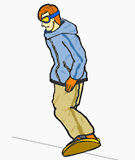 STEP 6: Increase the edge angle of your Snowboard. Take note that there is a decrease in your speed. You will keep on slowing down as you continue to increase the angle of the Snowboard toe edge.
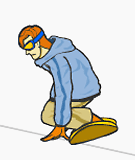 STEP 7: This is the last step of the exercise. While keeping the board on its toeside, gradually move down and put your hands on the ground to support your body. At this point, you already know how to use your toe edge in descents.
Edge awareness is one of the most important things you need to learn in Snowboarding. Practice Sideslipping and take full advantage of your toe edge.
Be comfortable in doing this skill so you can move on to the other Snowboard Exercises. Check out our next section and learn Sideslipping on your heel edge.
Traversing (Heelside)
Traversing will teach you how to control your speed and improve your balance while on the slope. You can start doing Heelside Traverses. This section will show you how.
Traversing allows you to move across the fall line while descending gradually. It is actually riding diagonally across the slope, taking you slowly from one side of the slope to the other. You can do traverses in two ways, depending on the position you make and the board edge that you use. One of them is Traversing – Heelside. You will make use of your downhill edge in order to control your speed.
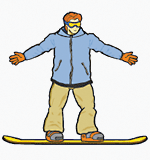 STEP 1: In traversing using the heel edge, look towards the direction where you want to go. This is one of the most crucial things that you should do when traversing. Spread your arms to help in keeping your balance.
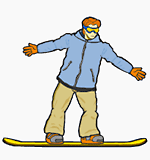 STEP 2: Then, turn your head and upper body towards the direction you wish to travel to. Shift more weight on your leading foot and move together with your other foot. Remember to keep the board angled downhill but only slightly.
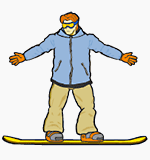 STEP 3: Return your Snowboard to its original position across the fall line. Get ready to move to the other side of the slope. Look towards the direction where you want to go.
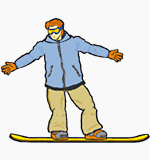 STEP 4: Just like in Step 2, turn your head and upper body towards the direction you wish to travel to. Shift more weight on your leading foot and move together with your other foot. Remember to keep the board angled downhill but only slightly.
Practice traversing using your heel edge so you will be able to control your speed and direction and improve your balance. Make sure that you are already comfortable in doing Traverses (heelside and toeside) before trying other Snowboard Exercises.
Traversing (Toeside)
Traversing is a maneuver that takes you from one side of the slope to the other while descending gradually. In this section, learn how to traverse using the toe edge of your board.
If Sideslipping is the act of sliding down the fall line using the heel or toe edge to control your descent, Traversing is a skill that takes you from one side of the slope to the other while descending gradually. You can use the toeside or heelside in traverses. In this section, learn how to traverse using the toe edge of your Snowboard:
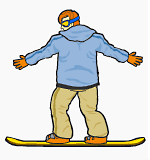 STEP 1: In traversing using the toe edge, it is very important to look towards the direction where you want to go. Spread your arms to help in maintaining your balance.
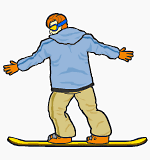 STEP 2: Then, turn your head and upper body towards the direction you wish to travel to. Shift more weight on your leading foot and move together with your other foot.
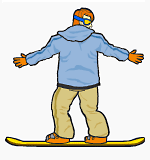 STEP 3: Return your Snowboard to its original position across the fall line. Get ready to move to the other side of the slope. Look towards the direction where you want to go.
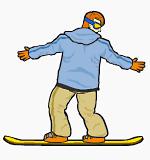 STEP 4: Just like in Step 2, turn your head and upper body towards the direction you wish to travel to. Shift more weight on your leading foot and move together with your other foot.
Mastering this skill can help you control your speed and direction. Continue practicing until you feel comfortable traversing. Soon, you can control both edges and you can make a controlled stop when necessary. Make sure that you are already comfortable in doing Traverses (heelside and toeside) before trying other Snowboard Exercises.
Falling Leaf
As the name suggests, the Falling Leaf is similar to the movement of a leaf that falls from a tree. The difference is that this Snowboard Exercise involves a change in direction.
Another movement that you should learn is the Falling Leaf. This is a Snowboarding Exercise wherein the rider skids back and forth on the same edge in an imaginary corridor, almost like a leaf when it falls from a tree.
The difference is that, unlike the leaf, the rider can control the path that he wants to go to. The trace that the rider will leave on the snow will be a zigzag pattern.
The Falling Leaf is almost similar to Traversing, except that the former incorporates a direction change. This is another good move to help you get down on tricky or steep slopes.
When you are able to do the Falling Leaf, you will be able to travel in any direction no matter where your Snowboard is facing. Likewise, it will also help you hone your edge control skills.
The Falling Leaf also adds directional control to your sideslip. Just remember that whichever end of the board has the most weight upon, it goes down the hill first.
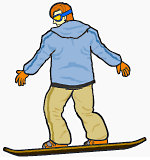 STEP 1: Start in the same way you would when performing a Toeside Traverse. It is very important to look towards the direction where you want to go. Spread your arms a bit to help you maintain your balance. Put your weight on your front foot.
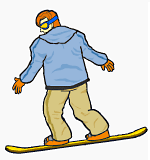 STEP 2: Cut across the slope’s Fall line. Keep your balance on the toe edge. Don’t forget to keep the angle of your traverse in a considerable degree. Stop as soon as you get to the far end of the trail. Do this by bringing the board back to an angle directly across the fall line.
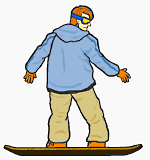 STEP 3: Stay balanced on your toe edge. Do not flip over or begin a Heelside Traverse on the other edge. Turn your head and look over your shoulder. Gently put your weight on your backfoot. Traverse back across the slope.
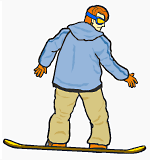 STEP 4: Keep your angle in a slight form. Also, make sure that you stay in your toe edge. When you reach the opposite end of the slope, shift your weight and direction. Ride the board nose-first and continue with another traverse using your toe edge.
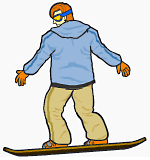 STEP 5: At this point, you have successfully made the first zigzag pattern. Just repeat the process until you reach your desired destination.
If you want to do the Falling Leaf using your heel edge, just repeat the exercise, but use your Snowboard’s heel edge. Just keep practicing this skill because it will be very helpful for you to travel down terrains.
Garlands
Garlands are called as such because the traces that you will leave on the snow are similar to garlands that you see in Christmas trees. Read on and learn how to do this exercise.
After learning how to perform the Falling Leaf, you are now ready to try doing Garlands. These are actually partial or half-turns in which changing edges is not necessary.
They are called as such because the tracks that you will leave on the snow are similar to garlands that you see in Christmas trees.
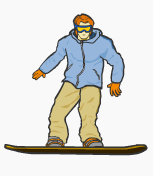 STEP 1: You need a wide area for this exercise. Go to the top of the hill and position yourself across the Fall line. Start with a heelside position. Look towards the direction where you want to go.
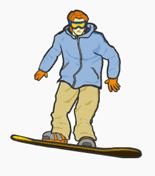 STEP 2: When you’re ready, decrease the edge angle of your Snowboard. Point your board down the Fall Line and then shift your weight forward by applying weight on your leading foot.
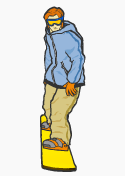 STEP 3: Begin a straight glide. Keep going until you pick up some speed. You will notice that you will gain speed as you point the tip of your board closer to the Fall line. Remember to look towards the direction where you want to go.
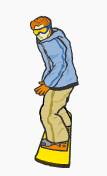
STEP 4: After gaining the desired speed, slow down by increasing the edge angle of the board and shifting your weight backward. Get ready to turn sideways to decrease your speed.
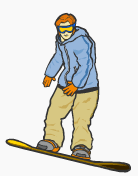 STEP 5: Move the tip of your board gradually across the Fall line. Take note that as you do this, you will be slowing down. Maintain your balance as you change the position of the board.
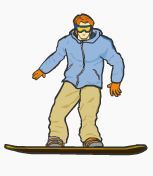 STEP 6: You will come to a complete stop when you turn your board uphill or if its position is already across the Fall line. Repeat the process until you are comfortable doing it on your heel edge. After that, try doing Garlands on your toeside.
To sum it up, these are the important things to keep in mind in doing Garlands: look towards the direction where you want to go, decrease the edge angle of your Snowboard and point the tip down the Fall Line, and turn uphill to slow down or stop. Once you get comfortable in doing Garlands, you will find that doing full turns will be a lot easier.
Linking Turns
Linking Turns is the final step in our beginner course where you combine all you have learned. At this point, you should be comfortable with traversing and performing Garlands.
You also need to get used to rising to a straight position and going down to a bent position while traversing. You can do this by practicing how to rise and fall on a flat surface, and then use the same motion while traversing on both edges and maintaining your speed.
What are you going to learn?
Linking Turns is a sequence of traversing, changing edge, and traversing again. Once you are able to link turns, you can consider yourself a ‘real snowboarder’ and you will look like one too!
Getting Started
Start by finding a groomed, gradual slope, preferably with as little change in contour as possible. It would be better if the area is not crowded so you will not be distracted or nervous because of people watching you. Visualize the run from the top. Make a mental note of where you might make your turns.
Heelside Turn
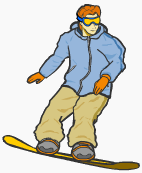 STEP 1: Start by traversing in the same way you learned while doing Garlands. Turn your head and torso to face the direction where you want to travel. Keep your knees bent and your center of gravity low. Only try your first turn when you are comfortable with traversing.
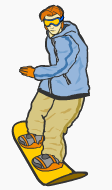 STEP 2: Start your first turn by shifting your weight forward to point the board downhill. You will accelerate as your board points towards the fall line. At this point, you can always abort your turn by shifting your weight backwards slightly and pushing your board up from the fall line using your rear leg, bringing you back to a heelside traverse.
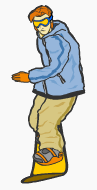 STEP 3: Halfway in your turn, your board will be pointing straight down and you need to pivot the board from heelside to toeside. Twist your foot to turn the board across the fall line and push the board through the turn using your rear foot. Extend your legs and shift your weight upward as you cross the fall line. Make sure to switch from heelside to toeside swiftly. Without an edge, you will continue to pick up speed and you will likely fall.
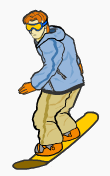 STEP 4: Complete your turn by twisting your front foot further and pushing your board away from the fall line using your rear foot. Turn your head and torso in the direction of your turn. At the end of the turn, you should be comfortably traversing on your toe edge. You have completed your toe-side turn!
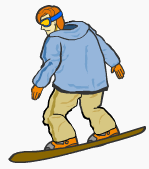 STEP 5: You have now completed your heelside turn and you are traversing back on your toeside.
Toeside Turn
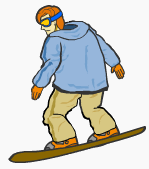 STEP 1: This is like the first step of the Heelside turn. Start by traversing and keep your head and torso facing the direction where you want to travel.
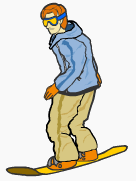 STEP 2: Start your turn by shifting your weight forward to point the board downhill. You will accelerate as your board points towards the fall line. At this point, you can always abort your turn by shifting your weight backward slightly and pushing your board up from the fall line using your rear leg, bringing you back to a toeside traverse.
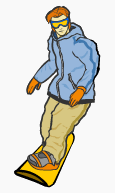 STEP 3: Halfway in your turn, your board will be pointing straight down and you need to pivot the board from toeside to heelside. Twist your foot to turn the board across the fall line and push the board through the turn using your rear foot. Extend your legs and shift your weight upward as you cross the fall line. Make sure to switch from toeside to heelside swiftly. Without an edge, you will continue to pick up speed and you will likely fall.
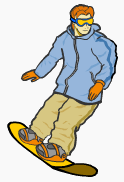 STEP 4: Complete your turn by twisting your front foot further and pushing your board away from the fall line using your rear foot. Turn your head and torso in the direction of your turn. At the end of the turn, you should be comfortably traversing on your toe edge. You have completed your heel-side turn!
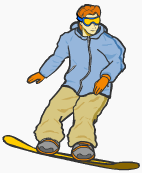 STEP 5: Repeat the same steps to make the heel-side turn. Linking turns to look like a ‘real snowboarder’ is simply completing the sequence of traversing, toe-side turning, traversing, and heel-side turning.
Tips
Do not be afraid in linking turns. As long as you have enough confidence in your traversing skills then making your first turns should not be that scary anymore. Practice small turns on gentle slopes first.
The crucial moment in making a turn is when you switch edge: heelside to toeside and toeside to heelside. It is that brief transition phase where your Snowboard is not gripping the snow on either edge that most people lose control and fall.
Once you are comfortable in doing the turns, try to intentionally change the rhythm of your turns by increasing or decreasing the length of each turn randomly or according to the trail. Doing this will give you greater control of your turns.
It will also allow you to be able to turn whenever you need to.
Snowboarding Tricks
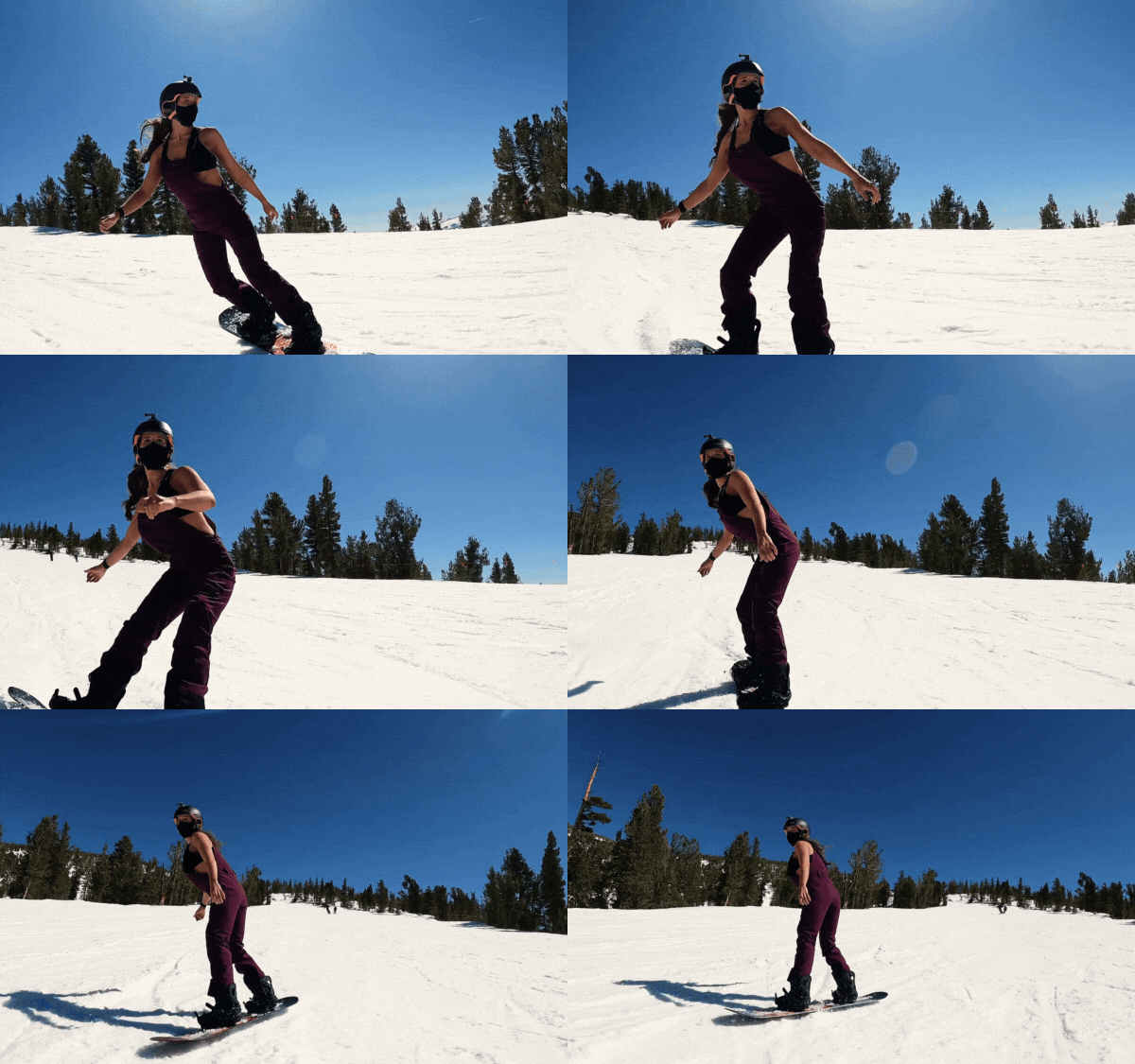
Being able to perform several tricks can make your Snowboarding adventure more exciting and can give you the adrenaline rush you are looking for. Learn Aerial and Surface Tricks as well as Tricks on Rails and Halfpipe.
Learn more here: All Snowboarding Tricks
Now that you have already learned Snowboarding with the help of this online course, you may just be able to make advanced moves in your next snowboarding and ski holidays!
In the process of Learning How to Snowboard, you can always go back to our online course and get a Snowboarding Tip if you are having difficulties doing a particular maneuver.
With the help of these sections, we hope that you will be on your way to becoming a good snowboarder in no time.
FAQs
1. How to practice snowboarding at home?
One way to practice snowboarding at home is by using a simulator. A simulator allows you to ride the slopes with realistic graphics and sounds. You can also use a VR headset to experience snowboarding in a new way.
2. Can someone be too old to learn snowboarding?
No! While there may be some techniques that are more suited for younger snowboarders, there is no age limit to learning and enjoying snowboarding. In fact, many people learn snowboarding at a much older age than they would expect.
3. Can you learn snowboarding in one day?
Snowboarding is not a skill that can be learned in one day. It takes some practice and effort to learn how to snowboard well. However, with our tutorials and videos, you will be able to learn how to snowboard efficiently in three days.
4. Can you snowboard with no experience?
Snowboarding definitely requires some level of experience, but it’s not impossible to start without any. Our guide will walk you through the basics and help you find the right snowboarding gear for your needs.
5. Can snowboarding be dangerous for beginners?
Yes, snowboarding can be dangerous for beginners if they don’t have the right equipment. Make sure you have the right shoes, bindings, and a helmet to protect your head. If you are a beginner and still have doubts, consult an experienced snowboarder.
Final Words
Snowboarding is a great way to spend a winter day. With the right tips and lessons, you can have a blast on your snowboard and have fun with your friends.
It’s important to remember that snowboarding is supposed to be fun! Don’t take things too seriously and let loose while enjoying the scenery around you.